
Views: 78


Compare different methods for creating threads in your parts and adhere to step-by-step guidelines on how best to install your fasteners.
Threaded fasteners certainly are a popular approach to securing 3D imprinted parts. Threaded fasteners enable quick assembly and and provide strong connections disassembly.
This article will talk about the most likely threaded fastening ways to apply when coping with 3D printed parts and talk about the methodology behind implementing all of them.
Generally of thumb the minimum amount wall structure thickness around a thread should match the size of the fastener (e.g. an M5 fastener takes a minimum of 5mm wall structure thickness around the threaded hole). If wall structure thickness is as well low parts can bulge and distort because of the added stress and perhaps (especially FDM) delamination or fracture may appear.
The table below introduces the threaded fastening strategies that are suitable to 3D printing.
Process | Description |
Inserts | Popular method used regularly that gives a strong metal on metal connection but requires additional components and installation |
Embedded nut | Fast method for securing components. Accurate print and design are needed |
Self tapping screws | One off method of securing parts that is not suited to repeated disassembly |
Cutting threads | Cutting a thread offers design freedom however correct tapping procedure is important |
Printing threads | Not suited for small threads (less than M5) and requires high printer detail/resolution to print accurately |
Notice: Drilling the pilot/alignment hole to the desired diameter post-printing, before implementing any of the fastening methods discussed in this article, will typically give a more accurate diameter compared to a 3D printed hole.
Two types of inserts are best suited for 3D printed parts; heat set tap-in and inserts inserts. Inserts provide strong metal on metal contact and are very easy to install. An accurate pilot hole is required so drilling is recommended before installation.
- Heat set inserts
1. Align the insert with the pre-printed or drilled hole (for hole sizes refer to the insert manufacturer's recommendations)
2. Insert a soldering iron into the insert heating it and the surrounding material up (avoid overheating and melting the surrounding material)
Apply pressure slowly, pushing the insert down into the hole to the desired depth.
- Tap in inserts
1. Align the insert with the pre-printed or drilled hole (for hole sizes refer to the insert manufacturer's recommendations)
2. Using a hammer softly tap the insert down into the hole to the required depth.
Another approach to securing 3D printed components together is normally to embed a nut in to the component with a nut designed cavity (also known as a nut boss). This method does not require any material removal. Determining the optimal nut boss sizes requires several iterations often. Printing small test parts to determine the ideal sizes can save on material and time costs.
1. Measure your nut. If you do not have access to the nut a quick internet search will reveal standard overall sizes for both metric and imperial nuts.
2. Include the desired nut profile in your CAD model. An iterative process might be required to find the best nut clearance based upon printer calibration. As a starting point a 0.2 mm offset around the nut (0.1 mm each part) should give a loose fit. This may need to be improved for nuts greater than M12 also.
3. Select the appropriate slice out depth (typically just below flush).
4. Including a drop of superglue on the relative back part of the nut will help secure it in place.
Self tapping screws cut a thread into a pre-drilled hole as they are screwed down. This gives a quick assembly method but is not suited for applications where parts shall regularly be assembled/disassembled. Special self tapping screws for plastic can be used that limit the radial stress on 3D imprinted holes lowering the likelihood of bulging, fracturing or delamination occurring.
1. 3D print or drill a hole in the desired screw location. For optimal pilot hole size consult the self tapping screw supplier. A pilot hole size that provides 75% to 80% thread engagement is a great starting point if this information is hard to come by.
2. Assemble parts to be secured ensuring to correctly align all holes where the self tapping screws shall be used.
3. Slowly screw self tapping screw down into hole ensuring it remains perpendicular to the hole during fastening.
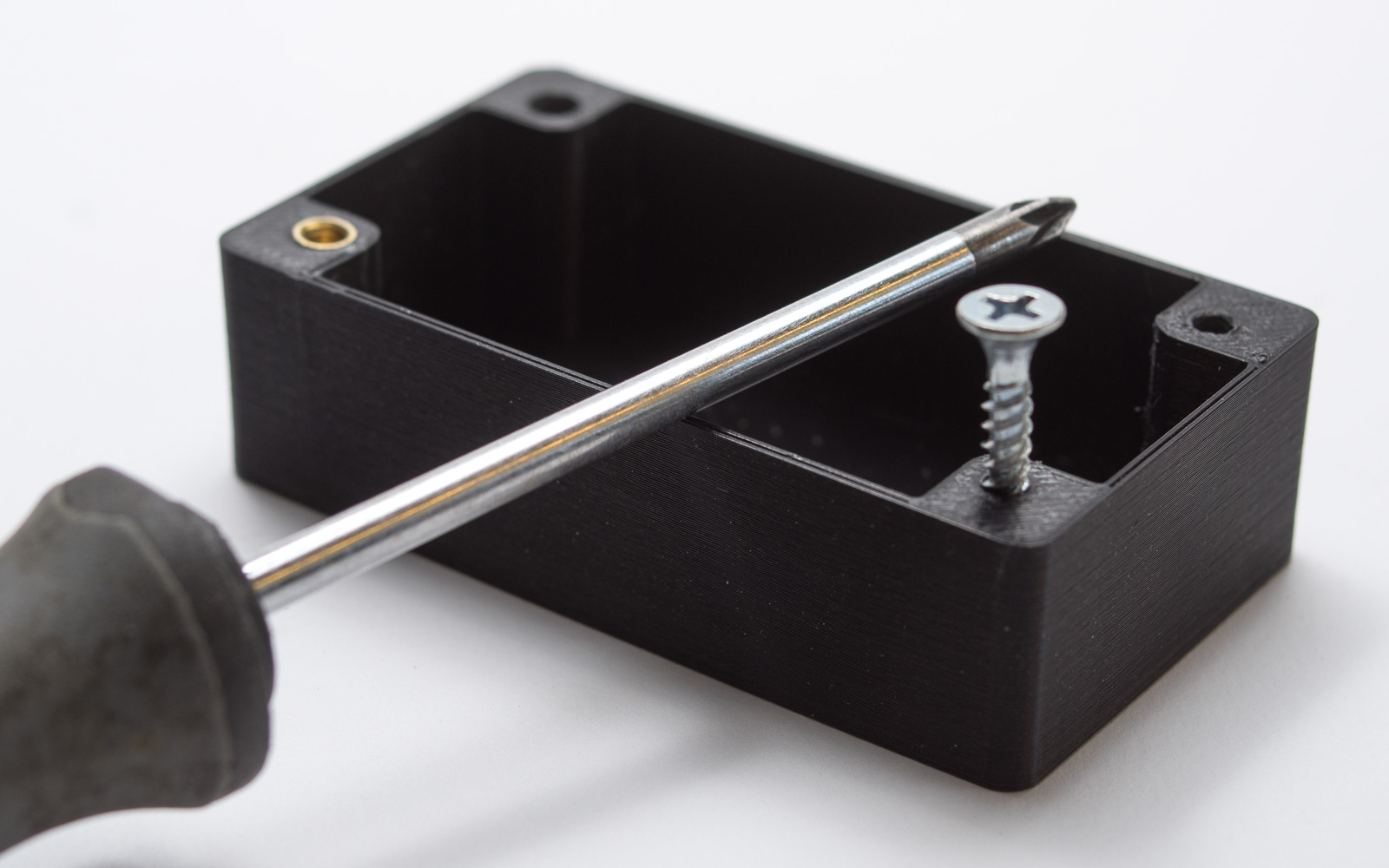
A self tapping screw
Cutting a thread (more commonly known as tapping) involves using a tap wrench to cut a thread in a pre-printed or drilled hole. Threads are cut in 3D printed plastics regularly.
1. 3D print or drill a hole in the required location of the thread. For pilot hole (tap drill) sizes that correspond to each thread size refer here
2. Using the correct size tap wrench and ensuring it remains perpendicular to the hole, gradually slice the thread reversing or “backing off‿to eliminate excess material in order to avoid binding.
3. Avoid forcing the tap wrench as this may result in splitting or fractures of the 3D printed materials.
4. Continue tapping to the required depth
5. Insert your preferred threaded fastener before assembly to make sure a clean fit.
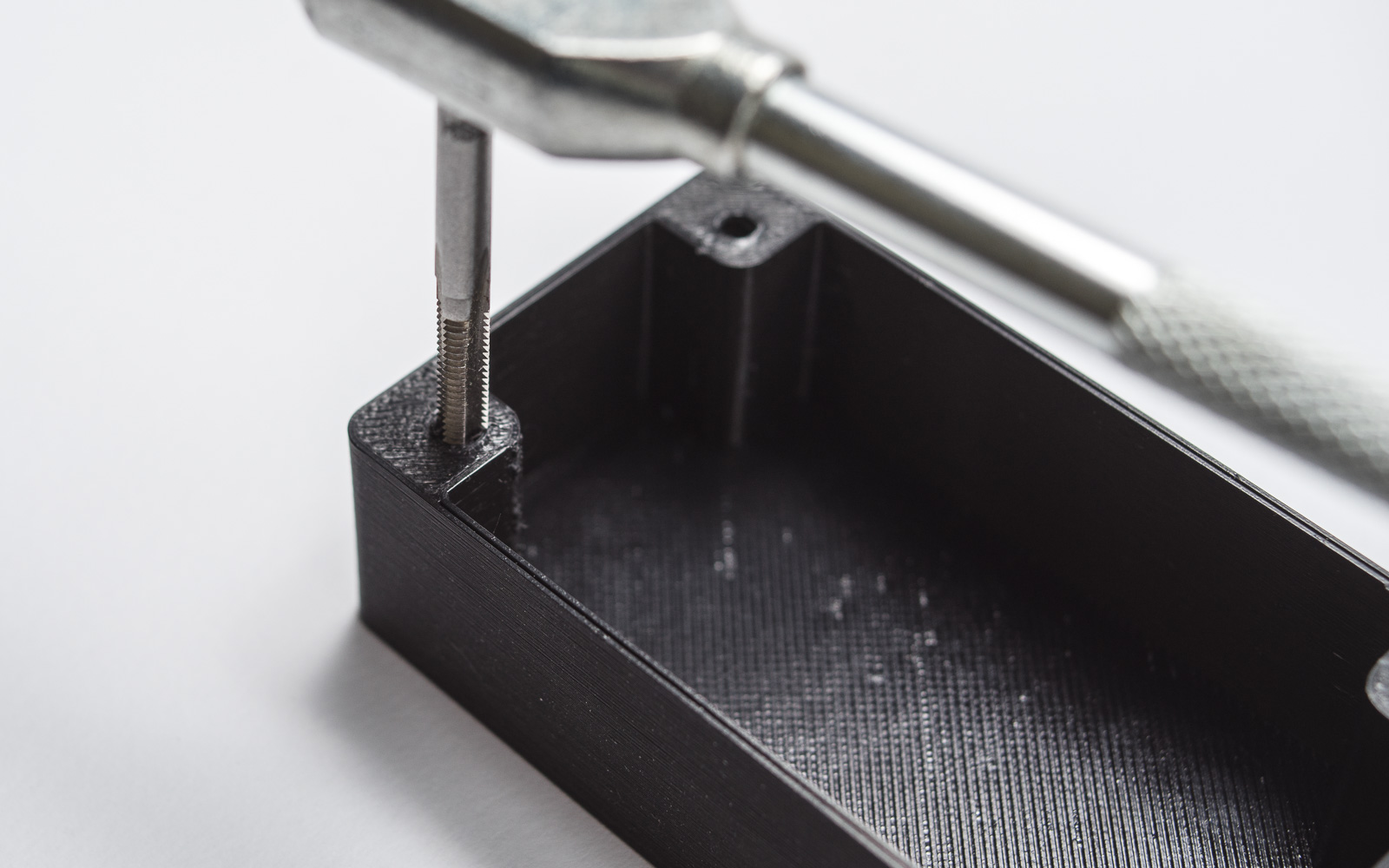
Cutting a thread with a tap wrench
3D printing threads removes the need for just about any extra measures post printing and invite parts to quickly be assembled together. Restrictions on printer quality and precision will govern the achievement of a imprinted thread. Threads smaller sized than M5 imprinted via FDM ought to be avoided with among the additional threaded fastener strategies discussed in this post implemented instead.
After printing the threaded fastener ought to be screwed and taken off the hole many times to completely clean the printed thread before final assembly.
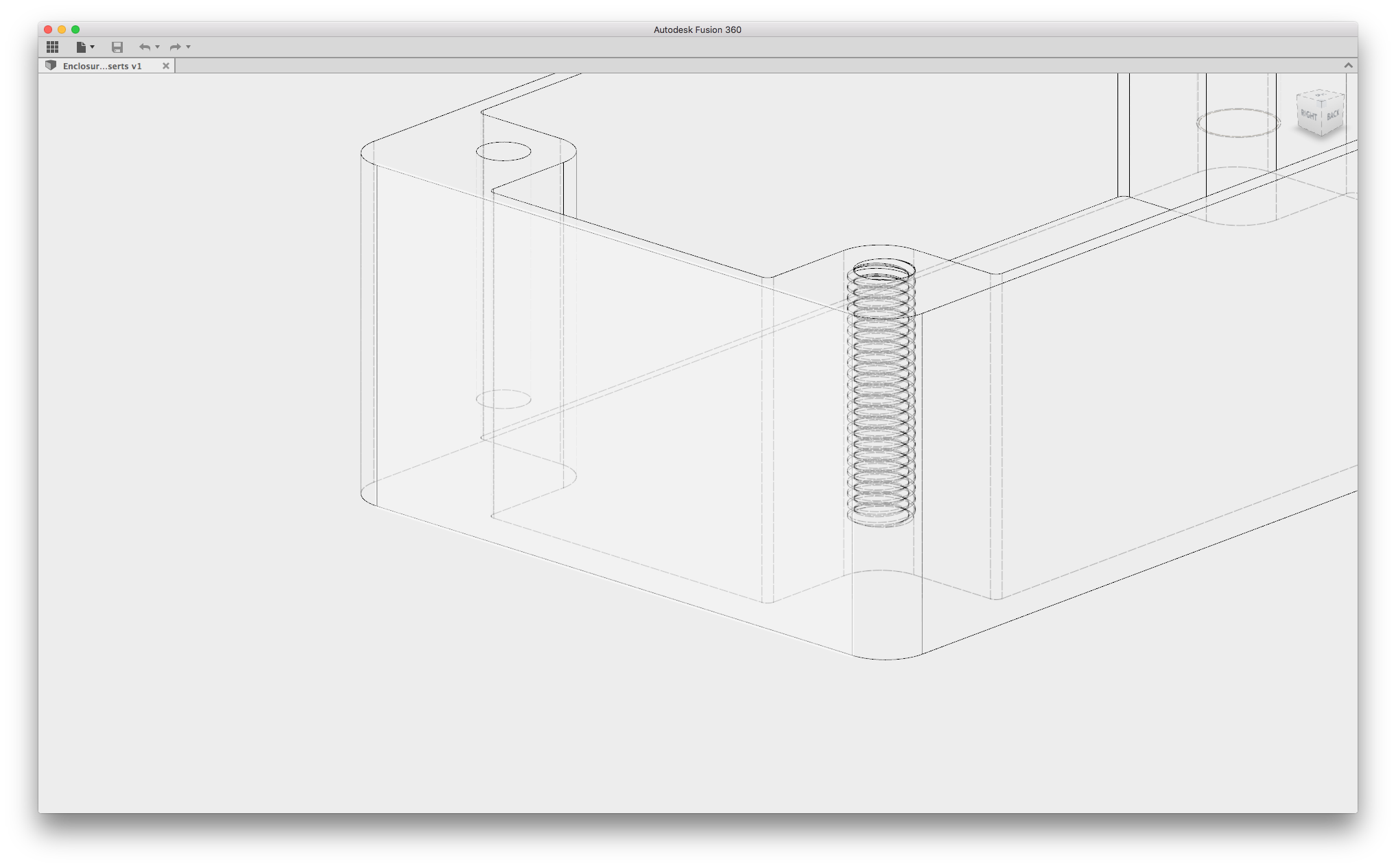
A thread added to a hole in Autodesk Fusion 360
For a far more accurate fastener pilot hole consider drilling the hole after printing instead of printing it in the component.
The minimum wall structure thickness around a thread should match the size of the fastener (e.g. an M5 fastener takes a minimum of 5mm wall structure thickness around the threaded hole).
Temperature up or tap in inserts and embedded nuts will be the most popular options for securing 3D imprinted components because of their simple set up, connection strength (metallic on metal) and simple repeated assembly/disassembly.
